1. The Evolution of Speed: From Cables to Serial Data
Legacy vehicles utilized mechanical cables to physically rotate a needle. Modern systems have transitioned to a purely electronic workflow. Most vehicles manufactured in the last two decades utilize Wheel Speed Sensors (WSS) as the primary data input for both braking safety and speed visualization.
2. The Core Connection: Data Fusion in the ECU
The Anti-lock Braking System (ABS) functions by monitoring the rotational frequency ($f$) of each wheel. In many modern designs—particularly European and late-model domestic platforms—the vehicle no longer uses a dedicated speed sensor on the transmission output shaft. Instead, the Electronic Control Unit (ECU) or ABS module averages the pulses from the wheel sensors and broadcasts a digital velocity packet over the CAN bus.If a specific wheel sensor designated as the 'Master VSS' fails, or if the magnetic encoder ring it reads becomes contaminated, the deterministic data stream is severed. Because the dashboard is simply a visual HMI (Human-Machine Interface) for this data, the speedometer will default to zero to avoid false reporting.
3. Symptoms of ABS-Related Telemetry Failure
* The 'Trifecta' of Warnings: Simultaneous illumination of the ABS, Traction Control, and Brake warning lights indicates a system-wide handshake failure where the ECU can no longer validate the vehicle's kinetic state. * Transmission Logic Disruption: The Transmission Control Module (TCM) uses speed data to calculate shift points. Without this input, the car may experience harsh shifting or enter 'Limp Mode'. * Speed-Sensitive Steering Flux: In vehicles with electronic power steering, the assist levels may fluctuate as the system loses its reference velocity, causing the steering to feel artificially heavy or light.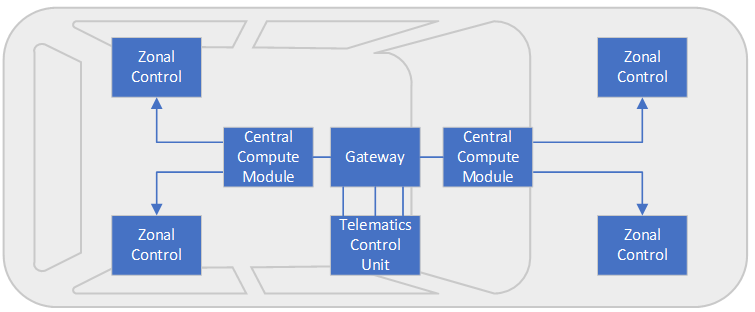
4. Step-by-Step Engineering Diagnostic
To isolate the failure within the integrated circuit path, engineers follow this diagnostic protocol: 1. DTC Acquisition: Connect a diagnostic scanner to the OBD-II port and query the ABS module for 'C' (Chassis) codes. A code like C0035 (Left Front Wheel Speed Sensor) identifies a specific hardware failure point.
2. Live Data Stream Audit: Monitor the individual velocity of all four wheels simultaneously while in motion. If three sensors report consistent velocity and one reports zero, the fault is isolated to that specific wheel's pulse-generation circuit. 3. Physical Integrity Audit: Inspect the magnetic encoder ring (tone ring) for physical fractures or ferrous contamination. Metallic debris on the sensor tip can induce signal jitter, corrupting the telemetry displayed on the dash.