1. The Engineering of Optimism: The 5% Buffer
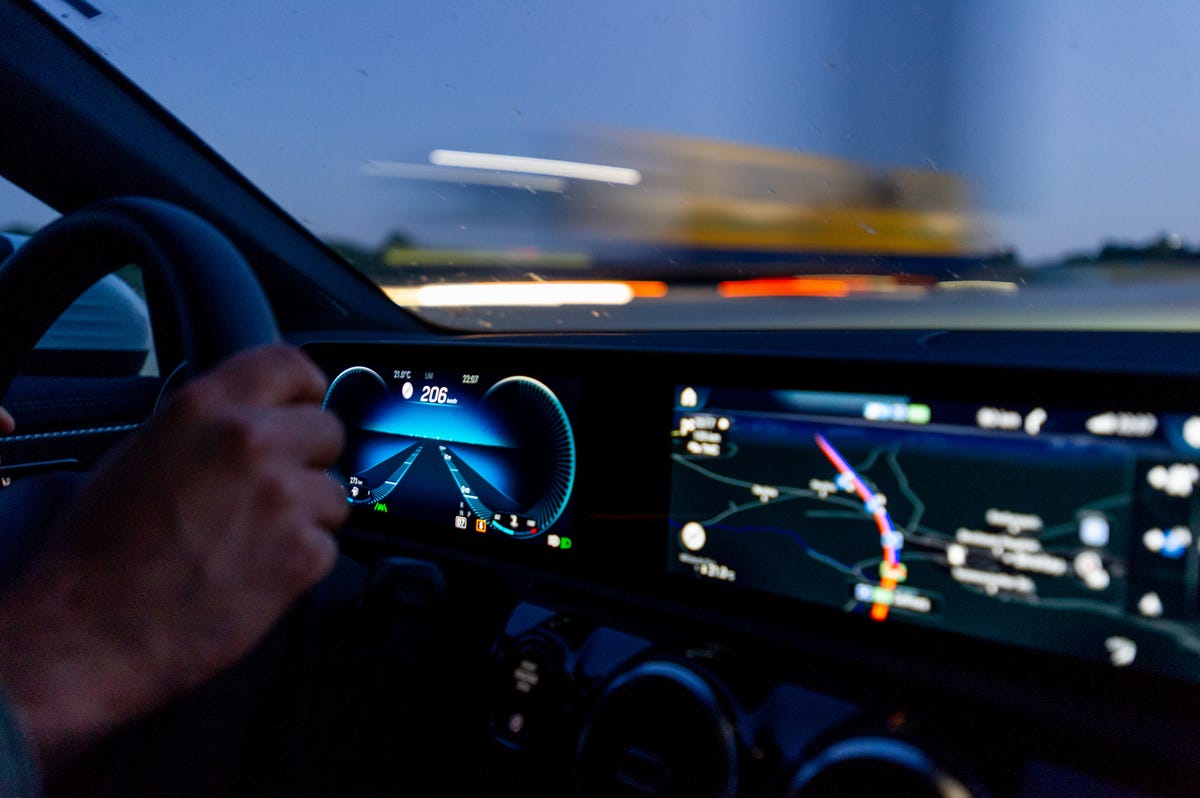
Most speedometers are not calibrated for absolute ground truth. To mitigate liability and prevent unintentional over-speeding, manufacturers utilize an 'optimistic' calibration. Regulatory standards often allow a margin where the speedometer displays a velocity 2–5% higher than the actual ground speed. Consequently, if your display reports 70 MPH, your deterministic velocity may actually be 67 MPH. Even before the gauge reaches its physical limit, the display is already lagging behind reality.2. Physical Variables: Tires and Centrifugal Growth
A vehicle typically measures speed by monitoring the rotation of the transmission output shaft or wheel hubs via a Vehicle Speed Sensor (VSS).* Rolling Radius Discrepancies: The ECU calculates speed based on a fixed tire circumference ($C = \pi d$). If you install larger aftermarket tires, the car travels a greater linear distance per revolution than the computer anticipates. In this scenario, your ground speed will exceed the speedometer's reported value. * Centrifugal Growth: At extreme velocities (150+ MPH), the centrifugal force causes the tire's carcass to expand slightly. This increase in the effective rolling radius means the vehicle is covering more ground than the rotational pulse-count suggests, essentially 'outrunning' the dashboard's calculated speed.
3. The Digital Ceiling: Software-Defined Limits
In modern software-defined vehicles, the 'governor' or electronic speed limiter is an automated script within the ECU that retards spark timing or cuts fuel once a specific velocity is reached. While the engine may have the torque to exceed the dashboard's maximum marked value, the Instrument Cluster Module may have a hard-coded limit.
Analog gauges are limited by the physical sweep of the needle and a mechanical 'stop' pin. Conversely, a digital dash might be programmed to 'cap' its display at a specific value (e.g., 155 MPH) even if internal telemetry from the ABS sensors or GPS indicates a higher velocity.
4. Telemetry Verification: Finding the Ground Truth
To find out if a vehicle is truly outrunning its cluster, engineers utilize external telemetry solutions that bypass wheel-rotation variables: * GPS Doppler Shift: High-frequency GPS trackers calculate velocity based on the time it takes to move between coordinates, providing an accurate ground speed regardless of tire wear or gear ratios. * OBD-II Data Ingestion: By querying the ECU directly via a diagnostic scanner, professionals can view the 'Raw Speed' PID (Parameter ID). Often, the ECU knows the actual speed, but the dashboard filters that data to include the manufacturer's safety buffer.Conclusion
A car can go faster than its speedometer because the dashboard is a filtered interface, not a raw data logger. Whether through centrifugal physics or software-defined caps, the gap between 'indicated' and 'actual' speed is a constant in automotive engineering. Understanding this delta is the first step in mastering the high-speed telemetry required for performance tuning and autonomous navigation.