1. The Fundamental Metric: Instantaneous Speed
In the realm of physics, there is a distinct difference between speed and velocity. When analyzing what a speedometer of an automobile reads, the answer is strictly instantaneous speed.Unlike average speed (total distance divided by total time) or velocity (which requires a directional vector), the speedometer provides a snapshot of kinetic state at a specific micro-moment ($t$). It is a scalar quantity, focusing on magnitude regardless of the vehicle's cardinal heading. For telemetry specialists, this is the essential 'Real-Time Health Monitor' for vehicle dynamics.
2. The Evolution of the Gauge: From Cables to Electrons
To appreciate the data on a modern dash, we must look at how the 'reading' is generated. The technology has shifted from tactile mechanics to high-frequency electronic pulses.Mechanical Era (Eddy Current Induction)
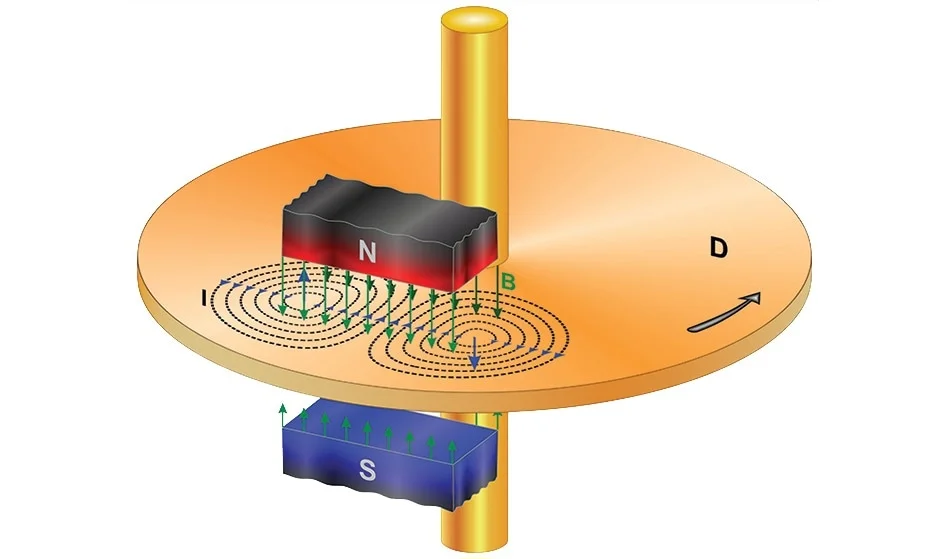
Historically, a flexible cable connected the transmission to the speedometer. As the cable spun, it rotated a permanent magnet inside an aluminum 'speedcup.' This created eddy currents, generating a magnetic torque that pulled the needle against a hairspring.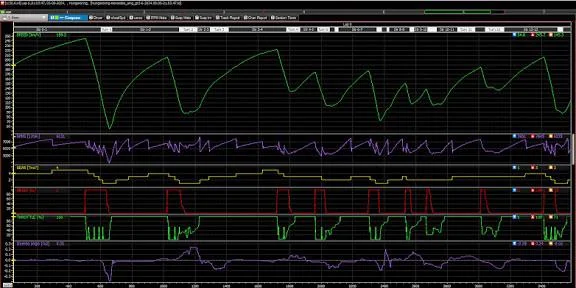
The Electronic Shift (Hall Effect Sensors)
Modern automobiles utilize the Hall Effect to generate digital pulses. A magnetic sensor is positioned near a toothed reluctor ring in the transmission or wheel hubs. As each tooth passes the sensor, it sends a square-wave pulse to the Engine Control Unit (ECU). The ECU calculates the frequency of these pulses ($f$) and translates it into a digital velocity reading.3. Data Discrepancy: VSS vs. GNSS Ground Truth
If you compare a car’s speedometer to a GPS (GNSS) app, you will often notice a discrepancy. This is due to the inherent variables of mechanical measurement:* Rolling Radius: A speedometer is calibrated based on a factory-spec tire circumference. Significant tread wear or aftermarket rims change the 'distance per revolution,' skewing the ECU's calculation. * Manufacturer Buffer: Many manufacturers calibrate speedometers to read slightly higher (2-5%) than the actual speed to comply with international safety standards like ECE R39. * Sensor Latency: While automotive sensors are fast, there is still a millisecond-level delay between the wheel's rotation and the pixel update on a digital dashboard—a critical factor in high-speed telemetry.
4. Future Trends: Predictive Telemetry and HUDs
We are moving toward an era where what a speedometer of an automobile reads is integrated into Augmented Reality (AR) Head-Up Displays (HUDs). Future AI-driven telemetry will utilize 'Predictive Speed,' adjusting cruise control and damping based on upcoming traffic patterns and V2X (Vehicle-to-Everything) data before a physical change in velocity even occurs.Final Thoughts
A speedometer is the most successful 'user interface' in automotive history. It takes complex, rapid-fire physical data and distills it into a single, actionable metric. Whether you are a restorer of classic mechanical gauges or a developer of autonomous vehicle software, understanding the sensor integrity behind the needle is the key to mastering vehicle performance.