1. The Architecture of Movement: From Cables to CAN-bus
Historically, speedometers utilized a mechanical cable connected to the transmission. Modern vehicles have replaced this with a digital data stream. Most contemporary designs have eliminated the standalone Vehicle Speed Sensor (VSS) in favor of the Wheel Speed Sensors (WSS) already required for ABS functionality.2. The Anatomy of an ABS-Speedometer Failure
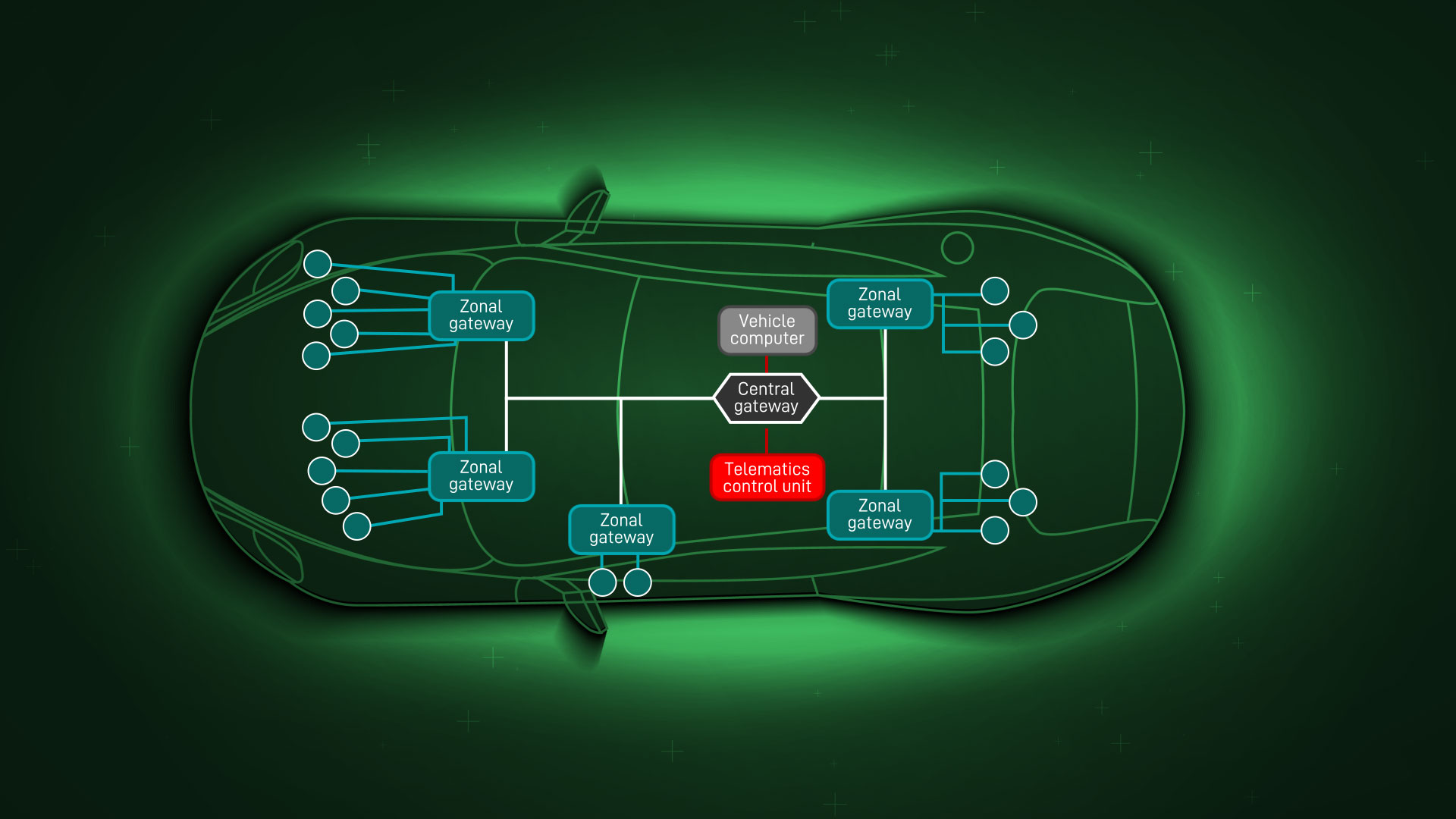
Modern speed detection relies on the Hall Effect. A magnetic sensor is mounted adjacent to a 'tone ring' (a notched metal ring on the axle). As the wheel rotates, the notches disrupt the magnetic field, creating a pulse-width frequency.1. Pulse Generation: Every notch creates a data point. 2. Logic Processing: The ABS module collects pulses from all four wheels. 3. Data Distribution: The ECU averages this data and broadcasts it over the CAN-bus (the car's internal network) to the dashboard.
If a sensor becomes contaminated with road debris or a wiring harness is severed, the ABS module detects a 'Handshake Failure.' As a safety protocol, it may cease broadcasting speed data, causing the speedometer to drop to zero.
3. The Cascading Effect of Sensor Failure
Because modern cars are highly integrated automated systems, a single ABS-related data error triggers a ripple effect across other subsystems: * Transmission Gear Hunting: Automatic transmissions use speed data to determine shift points. Without it, the TCM (Transmission Control Module) may shift harshly or enter 'Limp Mode'. * Cruise Control Deactivation: For safety, cruise control immediately disables if it cannot verify a stable velocity via the ABS loop. * Odometer Stagnation: Since the odometer is a software calculation of speed over time, a dead speedometer usually results in a non-functional odometer.
4. Technical Diagnostic Workflow
To resolve an ABS-related speedometer failure, technicians follow a systematic diagnostic hierarchy:Step 1: Chassis Code Audit
Standard OBD-II scanners often only read engine (P) codes. You must use a scanner capable of reading Chassis (C) codes. Look forC0035 (Left Front Wheel Speed Sensor) or U0121 (Lost Communication with ABS Module).Step 2: Physical Node Inspection
Inspect the sensor's magnetic pick-up. Road salt and metallic dust can coat the sensor, creating 'signal noise' that prevents the ECU from translating pulses into a speed reading.Step 3: Wiring Integrity
WSS wiring is exposed to extreme vibration. Inspect the harness for fraying or corrosion at the connector pins, which can disrupt the low-voltage signal path.Conclusion
In the era of integrated automotive tech, your speedometer is merely a visualization of the data provided by your braking system. When the ABS fails, the 'Single Source of Truth' for your vehicle's velocity vanishes. By utilizing digital diagnostics and ensuring sensor integrity, you can restore the automated data flow and ensure both speed and safety.