1. The Mechanical Skeleton: The Role of the Tie Rod
A tie rod is a purely mechanical component. It serves as the physical bridge between the steering rack and the steering knuckle, translating lateral movement into wheel direction.
Because tie rods are 'passive' components—lacking wiring, sensors, or data outputs—a standard wear-and-tear failure cannot electronically signal the ECU to disable the speedometer. Symptoms of tie rod failure are exclusively physical, such as steering play, vibration, or uneven tire wear.

2. The Digital Nervous System: Speedometer Logic
Modern speedometers function as digital displays for data packets sent over the CAN-bus (Controller Area Network). The ECU calculates vehicle velocity using two primary inputs: * Vehicle Speed Sensor (VSS): Monitors transmission output shaft rotation. * Wheel Speed Sensors (WSS/ABS Sensors): Located at each wheel hub to monitor individual tire RPM.3. The 'Cascade Effect': Correlated Failures
While a bad tie rod cannot electronically cause a speedometer failure, it can physically trigger a sensor failure through the following mechanisms:* Induced Vibration: Extreme 'death wobble' caused by a failed tie rod can create high-frequency vibrations that fracture the delicate internal wiring of a Wheel Speed Sensor or loosen its mounting bolt. * Physical Interference: If an outer tie rod snaps, the resulting flailing of the steering knuckle can physically sever the ABS/WSS wire harness located in the same wheel well, cutting the data feed to the ECU.
* Shared Impact Event: A significant impact (e.g., a severe pothole) can simultaneously bend a tie rod and shatter the ceramic magnet in the wheel speed sensor. In this case, the failures are simultaneous but independent.
4. Technical Diagnostic Workflow
To determine if the issues are linked, technicians utilize an automated diagnostic approach: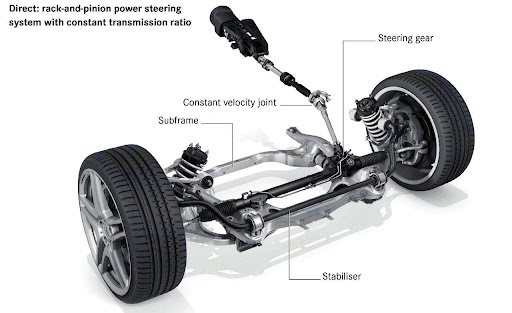
1. DTC Analysis: Connect an OBD-II scanner to identify Diagnostic Trouble Codes. Look for P0500 (VSS Malfunction) or C0035-C0050 (Wheel Speed Sensor Circuit). Tie rod issues will not generate codes. 2. Live Data Stream: Monitor the speed PID while the vehicle is in motion. If the ECU reports speed but the dashboard displays zero, the fault lies in the Instrument Cluster or the CAN-bus communication link.
3. Physical Node Inspection: Jack the vehicle and inspect the 'neighborhood' of the steering knuckle. Check the gap between the speed sensor and the tone ring, and inspect the tie rod's ball joint for excessive play.