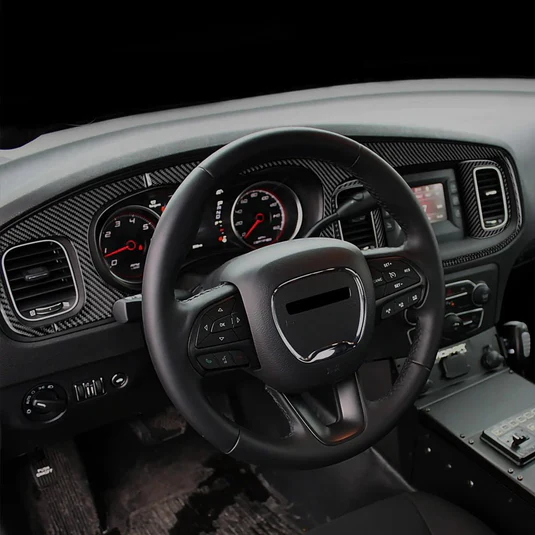
1. The Physical and Electronic Generational Gap
While the dashboard skeletons of the 2012 and 2015 Charger are physically compatible, the electronic backbone underwent a total overhaul. Modern vehicles function as a Local Area Network (LAN) using the CAN-bus (Controller Area Network) protocol.
* The Communication Barrier: In 2015, Chrysler (FCA) updated the data packet structures and communication speeds sent between the Body Control Module (BCM) and the Instrument Cluster. A 2015 cluster cannot natively 'interpret' the legacy 2012 data packets without a hardware or software bridge.
2. The Technical Roadmap for Integration
To successfully execute this swap, the conversion must address three distinct layers of automotive engineering:A. Hardware Translation (The Wire Harness)
The pinout—the specific electrical map of the connector—changed between the 2014 and 2015 model years. An attempted direct connection can result in an open circuit or critical module failure.* The Solution: A custom conversion 'bridge' harness is required to reroute signals from the 2012 factory plug to the 2015 cluster's input pins. This is the physical automation layer required to power the unit.
B. Software Handshake (Proxi Alignment)
When a new module is introduced to a Mopar CAN-bus network, the BCM identifies a 'Configuration Mismatch,' usually manifested as a flashing odometer.* The Solution: Utilizing specialized diagnostic software like AlfaOBD or Appcar DiagFCA, a technician must perform a Proxi Alignment. This automated routine instructs the BCM to scan the network, recognize the new cluster ID, and sync the vehicle’s build-configuration files.
C. Control Logic (Steering Wheel Interface)
The 2012 steering wheel buttons use a different resistance logic than the 2015+ systems. To navigate the menus of the 7-inch TFT display, the 2012 buttons must be electronically adapted or, more commonly, the steering wheel must be upgraded to a 2015+ unit to match the cluster's internal logic.3. Engineering Workflow for the Swap
1. Module Sourcing: Acquire a 2015+ cluster compatible with the vehicle’s engine trim (V6 vs. V8) to avoid RPM scaling errors. 2. Mileage Verification: Since mileage is stored within the cluster, the 2015 unit must be professionally programmed to match the vehicle’s actual mileage before installation to ensure legal compliance. 3. Harness Bridge: Install the conversion harness between the factory loom and the 2015 unit. 4. Network Sync: Connect a high-speed OBD-II interface and execute the Proxi Alignment to finalize the digital handshake.Conclusion
Swapping a 2015 speedometer into a 2012 Charger is a sophisticated exercise in software-defined vehicle modification. By leveraging custom hardware interfaces and OBD-II programming automation, owners can bridge the generational gap, proving that even a decade-old muscle car can be modernized through technical ingenuity and network-level hacking.