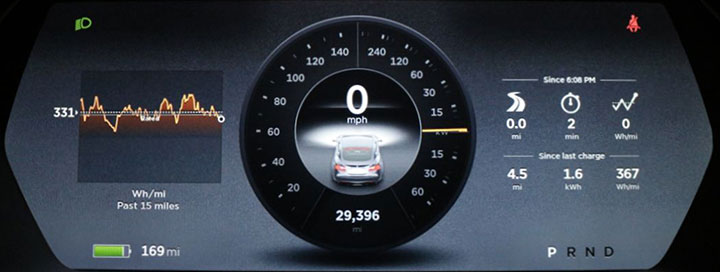
1. The Factory Diagnostic Path: Engineering Test Mode
Ford vehicles ship with a hidden diagnostic mode used by technicians for real-time sensor validation. This mode allows the IPC to bypass standard UI layers and display raw digital telemetry from the VSS (Vehicle Speed Sensor).
Access Protocol
1. With the ignition in the 'OFF' state, depress and hold the OK button on the left steering wheel spoke. 2. Cycle the ignition to 'ON' (or start the engine) while maintaining pressure on the button. 3. Continue until the display enters Engineering Test Mode. 4. Navigate the sub-menus to locate the digital velocity readout, often labeled asSpeedo or VSS.2. Persistent Calibration: Module Programming via FORScan
To implement a permanent digital speedometer, one must modify the configuration of the Instrument Panel Control (IPC) module. Many Taurus trim levels have the digital readout 'soft-locked' within the firmware. By utilizing FORScan—a specialized diagnostic software—engineers can toggle these feature bits.Deterministic Workflow
1. Interface Connection: Utilize a high-speed ELM327 or OBDLink EX adapter to bridge the vehicle's MS-CAN and HS-CAN buses to a workstation.2. Module Access: Navigate to the IPC configuration menu within FORScan. 3. Bit Manipulation: Locate the 'Digital Speedometer' parameter. Change the binary state from 'Disabled' to 'Enabled'. 4. Module Reset: Write the new configuration to the IPC. The cluster will perform a soft-reboot, integrating the digital readout into the primary display menu.
3. Hardware Integration: OBD-II Telemetry HUDs
For trim levels where the IPC firmware does not support a native digital toggle (e.g., base SE trims), external hardware can be utilized to automate data visualization. An OBD-II Heads-Up Display (HUD) acts as a secondary telemetry terminal, polling the 'Vehicle Speed' PID (Parameter ID) in real-time.* Data Polling: These devices use high-frequency polling (up to 10Hz) to ensure minimal latency between the VSS signal and the visual display. * Optical Projection: By projecting velocity data onto the windshield, these units reduce eye-fixation latency, allowing the driver to maintain focus on the road while monitoring instantaneous speed.
4. The Engineering Impact of Digital Precision
Transitioning to a digital speedometer reduces the cognitive load on the driver. While an analog needle requires spatial interpretation of a curved scale, a digital readout provides a discrete data point. This precision is essential for maintaining deterministic cruise control and reducing 'speed creep' in high-performance or heavy-duty platforms like the Taurus.
Conclusion
Modernizing a 2015 Ford Taurus with a digital speedometer is a masterclass in automotive module configuration. Whether through temporary diagnostic modes or persistent IPC recalibration, you are restoring the vehicle's telemetry to a standard that reflects modern HMI requirements.