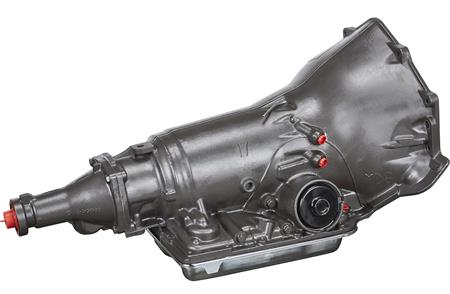
1. The Driven Gear: Commonality and Limits
The Driven Gear is the colored plastic gear that attaches to the speedometer cable or VSS sensor. In the GM ecosystem, the 200-4R and 700R4 often share the same family of 7/8-inch diameter driven gears.While the gears themselves might physically slide into either transmission, the Housing is not universal. You cannot bolt a 700R4 gear housing into a 200-4R case. Furthermore, these housings are 'offset'—a housing designed for a 34-39 tooth gear will not properly mesh with a 40-45 tooth gear. If the teeth don't mesh at the precise depth, they will either shave off or fail to spin entirely.
2. The Drive Gear: The Shaft Diameter Conflict
The Drive Gear—the one mounted internally on the output shaft—is where compatibility usually hits a brick wall.[Image showing the drive gear on a 700R4 output shaft vs 200-4R]
* 700R4: Typically features a larger output shaft (about 1.25 inches) and uses a specific metal clip for retention. * 200-4R: Uses a smaller shaft profile.
A drive gear from a 200-4R is physically too small to fit onto a 700R4 shaft, and a 700R4 gear will be too loose on a 200-4R. Since changing this gear requires pulling the tailshaft housing, most builders try to leave it alone and do all calibration via the external driven gear.
3. Modern Calibration: The Electronic Shift
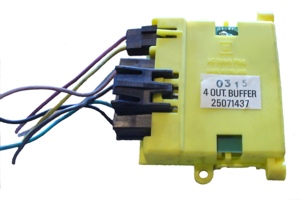
For builds where the exact mechanical gear combination is discontinued or impossible to match, many are turning to Electronic Ratio Adapters.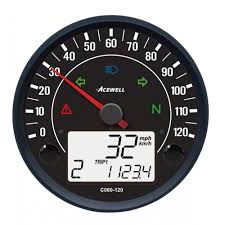
These devices act as a 'signal buffer.' They take the mechanical pulse from the transmission, adjust the frequency via a programmable interface (like dip-switches), and output a corrected signal to the speedometer. This eliminates the need for physical gear swaps and provides a level of accuracy that legacy plastic gears simply cannot achieve.