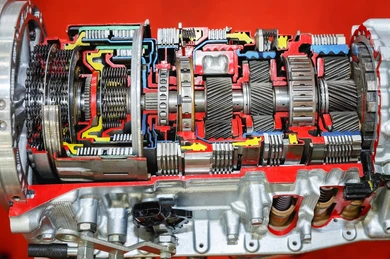
1. The Mechanics of Continuous Flow
To understand why the analog gauge is a benchmark for instrumentation, one must analyze its physical architecture. Unlike a GPS-based digital readout that samples velocity at discrete intervals (e.g., 1Hz or 10Hz), an old-style speedometer is physically synchronized with the drivetrain via a flexible rotating cable.As the cable spins, it turns a permanent magnet inside a metal 'speed cup.' This creates a rotating magnetic field that induces eddy currents, generating torque that pulls the needle against a precision hairspring. The resulting motion is infinitesimal and fluid; the needle traverses every possible fraction of a mile-per-hour without the 'stepping' effect seen in low-refresh digital displays.
2. The Digital Shift: Continuity vs. Discreteness
As the industry transitioned toward digital cockpits, the physical cable was replaced by Hall Effect sensors and microcontrollers. Modern speedometers are discrete—they count pulses over a specific gate time to calculate velocity.[Image comparing the smooth arc of an analog needle with the pixelated steps of an early digital speedometer]
For automotive developers, the challenge is recreating the 'analog feel' in a digital environment. High-end HMI (Human-Machine Interface) design now utilizes Kalman Filtering and software-based damping to mimic the organic, weighted movement of a physical needle, ensuring the digital readout remains intuitive and readable under rapid acceleration.
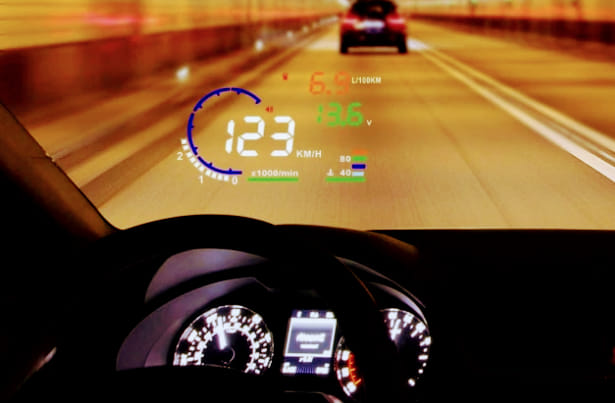
3. Analog Logic in Vehicle Automation
Modern vehicle automation—such as Adaptive Cruise Control (ACC) and Active Safety systems—strives to replicate the smooth feedback loops found in mechanical gauges.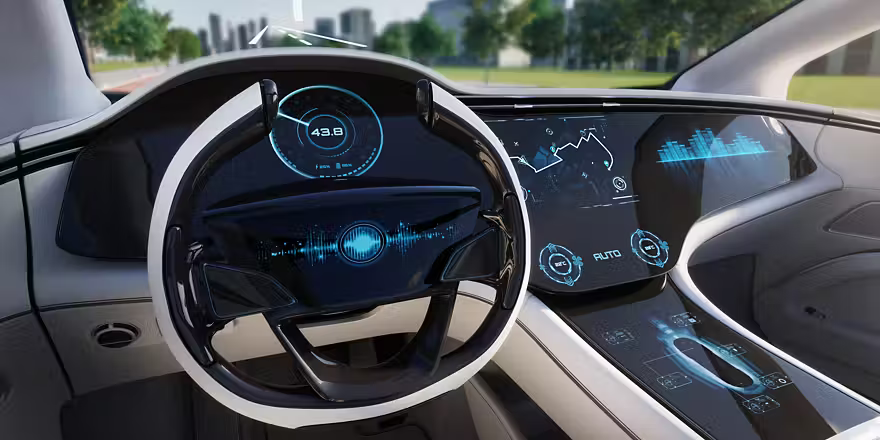
* Fluid Feedback Loops: Just as the speedometer cable provides constant torque to the needle, automated throttle controllers require high-frequency feedback. If the data refresh rate is too low, the system becomes 'staccato,' leading to jerky acceleration. * Skeuomorphic Visualization: We utilize digital dials that resemble their analog counterparts because the human brain processes spatial movement faster than raw numerical digits. An old-style speedometer is the ultimate example of a 'glanceable' interface.
4. Step-by-Step: Benchmarking Dashboard Fluidity
To implement digital instrumentation that matches the reliability of a mechanical gauge, follow these engineering principles: 1. Establish High-Frequency Sampling: Use a Vehicle Speed Sensor (VSS) with a high pulse-per-mile count to minimize 'quantization error'. 2. Implement Damping Algorithms: Apply a low-pass filter to the raw data stream to eliminate 'needle bounce' caused by road vibrations or electrical noise. 3. Optimize Refresh Rates: Ensure the HMI renders at 60Hz or higher to maintain the visual continuity of the analog sweep.